How to Cook Chicken So It’s Never Dry (+ Easy Recipes to Try)
Dry, rubbery chicken almost always comes down to one thing: overcooking. The good news is it’s the easiest kitchen problem to fix. Here is exactly how to get juicy, tender chicken every single time — plus a few easy recipes to put it into practice.
No fancy equipment, no brining overnight. Just a handful of habits that make all the difference.
Why chicken turns out dry
Chicken is lean, so it has little fat to protect it from heat. Push it too far and the moisture squeezes out. The usual culprits:
- Overcooking — by far the biggest one. A few minutes too long is all it takes.
- No resting — slicing straight away lets the juices run out onto the board.
- Cooking it fridge-cold — the outside overcooks before the middle catches up.
- The wrong cut for the job — lean breast is far less forgiving than thigh.
The rules for juicy chicken every time
Follow these and dry chicken becomes a thing of the past:
- Cook to temperature, not time. Chicken is done at 165°F (74°C) — and not a degree more. An instant-read thermometer is the single best upgrade for better chicken.
- Pat it dry and season well. A dry surface browns; a wet one steams. Good browning means more flavor and better texture.
- Sear, then finish gently. Get color over higher heat, then lower it (or move to the oven) to cook through without drying the outside.
- Don’t cook it cold. Let chicken sit out 10–15 minutes before cooking so it cooks evenly.
- Rest before slicing. Give it 5 minutes off the heat so the juices settle back into the meat.
- Use thighs when in doubt. Boneless thighs stay juicy even if you slightly overcook them — ideal for busy weeknights.
Quick chicken temperature guide
Whatever the recipe says, trust the thermometer. Pull the chicken at 165°F (74°C) in the thickest part — it will carry over a couple of degrees as it rests. Bite-size pieces cook in minutes, so start checking early; a whole breast takes longer, but the target temperature is the same.
Easy chicken recipes to try
Put it into practice with these — each one is built to keep the chicken juicy:
1. One-Pan Chili Chicken
Time: ~25 minutes
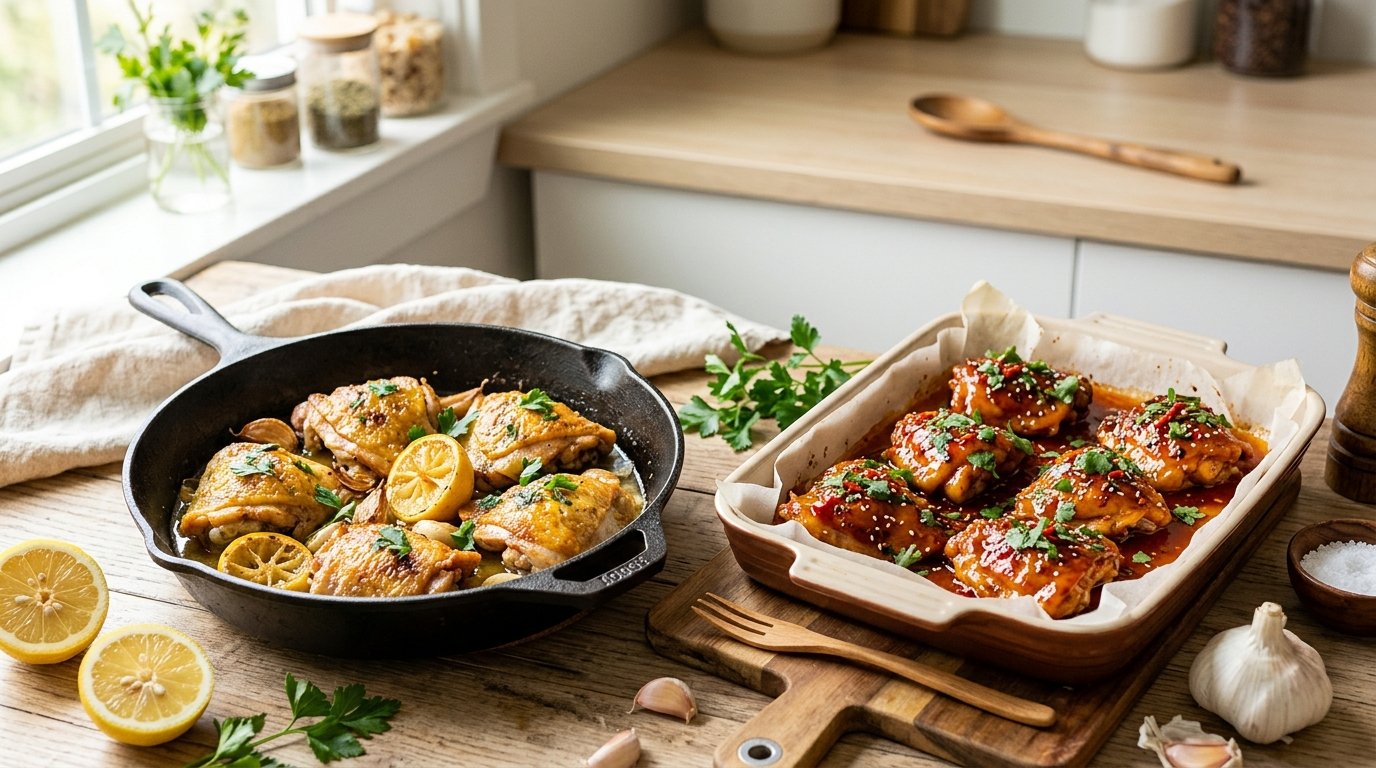
Bite-size chicken thighs seared and glazed in one skillet — thighs make it almost impossible to overcook.
Why it works: fast, forgiving thighs and a glossy glaze that keeps every bite moist.
2. One-Pan Lemon Garlic Chicken and Rice
Time: ~30 minutes
Chicken cooks gently on a bed of rice, staying tender while the grains soak up the flavor.
Why it works: the covered, low simmer keeps the chicken from drying out.
3. Weeknight Chicken Fajitas
Time: ~30 minutes
Thin-sliced chicken cooks fast over high heat, so it chars without overcooking.
Why it works: quick, hot cooking means juicy strips, not rubbery ones.
Frequently asked questions
What temperature is chicken done at?
165°F (74°C) in the thickest part, measured with an instant-read thermometer. That’s the safe and juicy sweet spot for every cut.
How do I keep chicken breast from drying out?
Don’t overcook it — pull it at 165°F. Pound thick breasts to an even thickness so they cook uniformly, sear then finish gently, and always rest before slicing.
Are chicken thighs or breasts better?
For juicy, forgiving results, thighs win — their extra fat keeps them moist even if slightly overcooked. Breasts are leaner and quicker but need more care to stay tender.
Can I fix chicken that’s already dry?
You can rescue it: slice it thin and toss it in a sauce, broth, or a glaze to add moisture back. It won’t be as good as juicy from the start, but it beats throwing it out.
Juicy chicken, every time
Master one habit — cooking to temperature and resting — and your chicken will be better than most restaurants’. Grab a thermometer, pick a recipe, and give it a go.
Ready to cook? Browse all our recipes, or start with our quick 30-minute dinners and easy side dishes to round out the plate.